Sundarban Safari Guide: Boat Route, Watchtowers and Tiger Sightings
Understand how a Sundarban boat safari works, what to confirm before travelling from Kolkata, which watchtowers may be included, and why tiger sightings are never guaranteed.
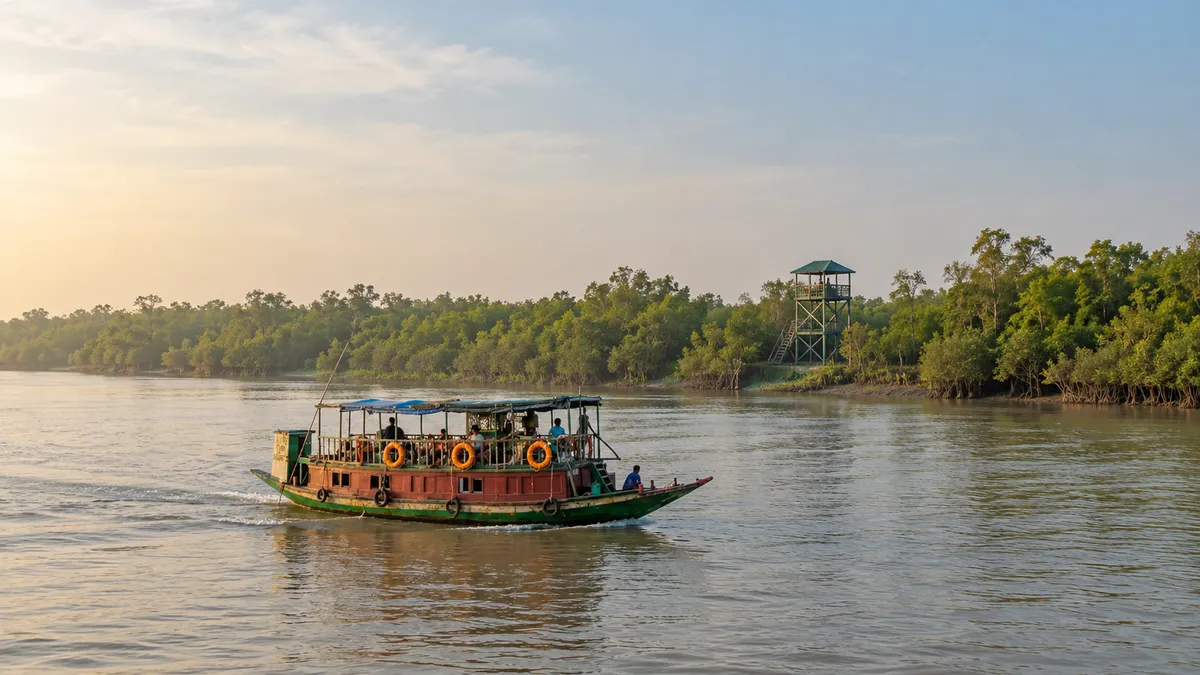
The short answer: A Sundarban safari is a boat-based forest trip, not a jeep safari. Travellers first arrange the Kolkata–Canning–Sonakhali journey, then continue from Sonakhali by a pre-booked tourist boat. The boat route and watchtower visits depend on the tour plan, permissions and current forest rules. A Bengal tiger lives in the Sundarbans, but a tiger sighting is never guaranteed.
This guide explains what first-time travellers should expect and what they should confirm before leaving Kolkata.
What is a Sundarban safari?
A Sundarban safari takes place on the waterways of the mangrove forest. The tourist boat travels through rivers, creeks and designated forest routes, while passengers observe the mangroves and wildlife from the boat. This is different from a jeep safari in a dry forest or grassland.
Inside the Sundarbans, the waterways are the practical roads. Travellers should remain with their arranged tour and follow the boat crew and forest guide. The route is not an independent road trip through the forest.
How do you reach the safari starting point?
Follow the route explained in our Kolkata to Sundarbans via Canning and Sonakhali guide: travel from Kolkata to Canning by train from Sealdah or by car, then continue from Canning to Sonakhali by car or auto. From Sonakhali, board the tourist boat arranged through your tour operator.
Book the complete tour before leaving Kolkata. If you arrive at Sonakhali without a confirmed booking, you may not get a tourist boat into the Sundarbans on the same day. The operator should confirm the Sonakhali meeting point, transfer plan, boat arrangement and the time you need to arrive.
How does the boat safari work?
Your tour operator arranges the tourist boat and the required forest permissions or charges included in the package. The official Sundarban Tiger Reserve boat-booking guidance explains that launches and boats are the means of transport inside the reserve and that tourists commonly use conducted tours arranged by private operators or West Bengal Tourism Development Corporation.
Ask the operator what your package includes before booking. Confirm whether the boat, forest permissions, transfers, accommodation, meals and sightseeing are included. Do not rely on an old fee or an old route description because rules, charges and operating conditions may change.
Which watchtowers may be included?
Depending on the tour itinerary, travellers may visit places such as Sajnekhali, Sudhanyakhali and Dobanki. Sajnekhali is known for its watchtower and interpretation centre. Dobanki is known for its elevated canopy-walk experience. Some longer itineraries may also include Jharkhali or other sightseeing stops.
Sundarban Places to Visit by Boat from Kolkata: Realistic Family 2N/3D Route
Sundarban Self-Plan vs Package from Kolkata: Permits, Boats, Costs and Family Booking Guide
No single list applies to every tour. Ask your operator which watchtowers and destinations are included in your dates and whether the route can change because of forest rules, weather, tide or operating conditions. A tour should not promise every watchtower unless that exact itinerary has been confirmed.
Can you see a Bengal tiger on safari?
The Bengal tiger lives in the Sundarbans and sightings happen, but tigers are wild, elusive and never guaranteed. Wildlife sightings depend on tide, season, silence and luck.
Travellers may also see spotted deer, wild boar, estuarine crocodiles, monitor lizards and rich birdlife, including kingfishers, egrets, raptors and winter migrants. These are possibilities, not promises. A responsible guide should describe the wildlife honestly rather than guarantee a tiger photograph.
What should families carry?
- Drinking water and any personal medicines.
- A hat, sunscreen and light, comfortable clothing.
- Insect repellent.
- Comfortable footwear for permitted stops and watchtower visits.
- Rain protection when the weather requires it.
- Binoculars for birds and distant wildlife.
- A camera or phone, if you want to record the journey.
- A small day bag instead of unnecessary heavy luggage on the boat.
Ask your operator whether any additional item is needed for your particular boat and itinerary. Packing advice can change with the season and the length of the tour.
What rules should you follow on the boat?
Listen to the boat crew and forest guide throughout the trip. Stay seated or within the permitted passenger area, keep noise low, and do not ask the boatman to leave the approved route for a closer look at wildlife.
- Do not feed or approach wild animals.
- Do not throw plastic or other waste into the river or forest.
- Do not shout to attract a tiger, crocodile or bird.
- Follow instructions at watchtowers and other permitted stops.
- Do not enter restricted areas.
- Ask before photographing local people or private spaces.
These rules protect both travellers and the fragile mangrove environment. The aim is to observe wildlife without disturbing it.
Why should you book the safari in advance?
Advance booking is important because the boat journey is part of an organised travel plan. A trusted tour operator can coordinate the Canning-to-Sonakhali transfer, tourist boat, forest permissions, accommodation and meals where included.
If you reach Sonakhali without a booking, a same-day boat may not be available. Other travellers may have reserved the boats and packages in advance, and the day’s route may already be planned. Confirm everything before travelling from Kolkata instead of waiting until you reach Sonakhali.
What should you confirm before booking?
| Item | Question to ask the operator |
|---|---|
| Route | Will the trip follow Kolkata–Canning–Sonakhali and where should I meet the operator? |
| Transfer | Is the Canning-to-Sonakhali car or auto transfer included? |
| Boat | Is the tourist boat confirmed for my travel date? |
| Safari route | Which watchtowers and destinations are planned? |
| Permissions | Which forest permissions and charges are included? |
| Stay and meals | Are accommodation and meals included in the package? |
| Delays | What should I do if my train or car reaches Canning late? |
| Return | How and when will I return after the boat journey? |
Common Sundarban safari mistakes
- Expecting a jeep safari instead of a boat-based forest journey.
- Arriving at Sonakhali without a confirmed tourist boat.
- Assuming every tour visits every watchtower.
- Expecting a guaranteed Bengal tiger sighting.
- Booking a package without checking transfers, permissions, meals or accommodation.
- Using old prices, timings or rules without confirming them for the current season.
- Asking the boat crew to leave the permitted route.
- Making loud noise or throwing waste during the safari.
Plan the safari with realistic expectations
A good Sundarban safari is not measured only by whether a tiger appears. It is a quiet boat journey through a rare mangrove landscape, with the possibility of seeing wildlife and visiting permitted watchtowers. Plan the route carefully, book the tourist boat before travelling, and follow the operator’s and forest guide’s instructions.
For more planning help, read the Sundarban Safari topic hub, check the best time to visit guide, and review the Sundarban tour options.
Call or WhatsApp Sundarban Yatri before travelling to confirm the Sonakhali transfer, tourist boat, safari route, watchtower plan and availability for your dates.
Plan this trip
Ready to go? Explore our tours or send us your dates for a custom plan.
Winter Festival (Dec–Feb) · Hilsa Festival (Jul–Sep) · Send us your dates
Sundarban Places to Visit by Boat from Kolkata: Realistic Family 2N/3D Route
Sundarban Self-Plan vs Package from Kolkata: Permits, Boats, Costs and Family Booking Guide — keep planning your Sundarban trip.
Plan this trip
Visiting the Sundarbans soon?
One call sorts it — dates, safari slot, stay. Talk to a human, fastest.
Outside India? Send an enquiry form →