Best Time to Visit Sundarban for Couples — Season Guide
For most couples, October to March is the easiest season for a first Sundarban trip. This guide compares the cooler months, hotter shoulder season and rain-sensitive monsoon so you can choose with realistic expectations.
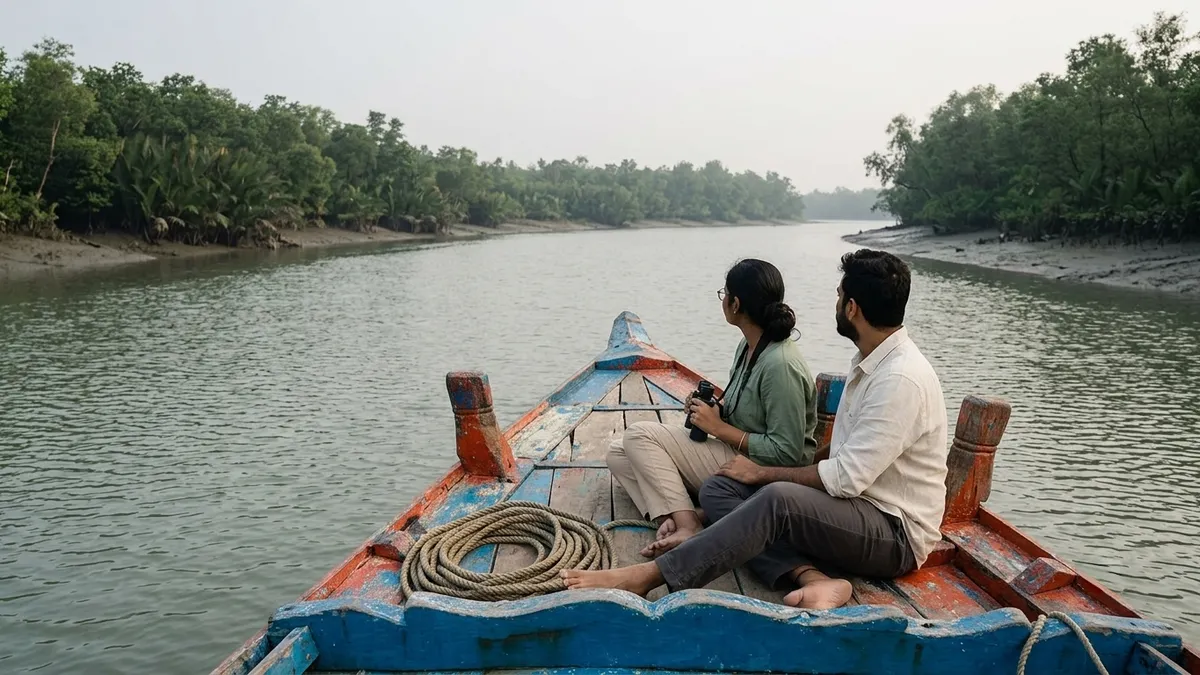
The short answer: For most couples, October to March is the most comfortable starting point for a Sundarban trip because the weather is generally easier for long boat days than the hotter pre-monsoon months or the rain-sensitive monsoon. It is not a guarantee of calm water, open routes or wildlife sightings. Check the current forest rules, booking availability and weather before you travel. For more planning context, start with the Sundarban best-time topic guide.
The Indian Sundarbans are a water-based destination: West Bengal Tourism describes the journey as road travel followed by a boat ride, while the National Tiger Conservation Authority describes the reserve as a maze of estuaries, channels and creeks. That makes season choice a comfort and flexibility decision, not just a question of scenery.
Which season is best for a couple?
| Season | Best for | Trade-off to plan for |
|---|---|---|
| October–March | Couples who want the most comfortable default for boat-based sightseeing and cooler conditions. | Higher demand is possible; wildlife is never guaranteed. |
| April–May | Heat-tolerant couples who prefer a quieter-feeling trip and can handle sun and humidity on the water. | Heat, humidity and mosquitoes can make long open-boat periods harder. |
| June–September | Couples who specifically want greener scenery and are comfortable with a flexible plan. | Rain, wind, tides, cyclones, visibility and local access can affect the experience; verify operations for your dates. |
This table is an editorial planning guide, not an official operating calendar. The West Bengal Department of Sundarban Affairs records that about 75% of annual rainfall occurs from June to September and that parts of the region can be cut off during the rainy season. Read the department’s climate and access notes.
Why October to March is the safest default for couples
Choose this window if you want your romantic break to spend more time outdoors without making rain flexibility the centre of the plan. The official climate description records temperatures around 20°C in December and January, while boat travel remains the defining way to experience the reserve. Sajnekhali is also described by West Bengal Tourism as a notable watchtower and birding location.
Winter does not turn the Sundarbans into a guaranteed wildlife show. The official tourism page lists tigers, spotted deer, wild boar, crocodiles, dolphins and turtles as wildlife of the region, and the NTCA describes the reserve’s habitat and species. Those are habitat facts, not promises that you will see a particular animal on a particular day. Check the West Bengal Tourism destination information and the NTCA reserve brief.
When April and May make sense
April and May can work for a couple that values a quieter trip more than cool weather. Treat this as a heat-tolerance choice: the official regional climate description places June and July around 28°C and describes a subtropical climate, but it does not provide a reliable day-by-day forecast for your date. Ask what boat shade, rest stops and accommodation arrangements are actually included rather than assuming them.
If either of you dislikes direct sun, humidity or mosquitoes, the cooler season is the simpler choice. If you are comfortable with heat, keep the itinerary flexible and confirm the latest departure status with the operator before paying.
Should couples visit during June to September?
They can, but monsoon should be a deliberate choice rather than the default romantic getaway. Green waterways and dramatic weather can be part of the appeal, yet rain and tidal conditions can change comfort and access. The Department of Sundarban Affairs records exposure to tropical cyclones, tidal ingression and flooding, and notes that some areas become difficult to access in the rainy season.
Do not copy a previous year’s closure dates into your plan. Ask for the current Forest Department notice and the operator’s written cancellation or rescheduling policy. The official WBSFDA booking terms say availability is subject to booking conditions, original ID is required, visitors must report at the stated place and time, and natural inconvenience or technical faults can affect services. Review the current WBSFDA booking terms.
What makes a Sundarban trip feel comfortable for two?
- Decide how much boat time you enjoy. The reserve is a water-based landscape, so a couple who wants privacy should ask whether the boat is shared or private and what facilities are actually included.
- Plan for quiet rather than guaranteed romance. Forest rules require visitors to follow permitted routes and behave quietly. A calm, respectful trip is more realistic than a promise of a private wildlife moment.
- Match the season to your tolerance. Cooler months suit couples who want predictable outdoor time; hot months suit those who accept heat; monsoon suits those who can reschedule if conditions change.
- Keep wildlife expectations honest. Tigers are wild and elusive. Sightings depend on tide, season, silence and luck, and are never guaranteed.
What should you verify before booking?
- Ask which Indian Sundarban gateway and route your itinerary uses, and where you will board the boat.
- Confirm whether the boat is registered, whether a forest guide and required permissions are included, and whether life jackets are available.
- Ask what happens if rain, tide, cyclone warnings or a forest notice changes the route.
- Check the accommodation, meal plan, privacy level and any transport included before comparing quotes.
- Check the official availability and reporting instructions close to your travel date. WBSFDA says bookings can be made up to 90 days before the date subject to availability.
For a concrete starting point, compare the Sundarban Winter Festival tour and then contact Sundarban Yatri through the public contact page to discuss your dates, group size and preferred pace. The Winter Festival runs from November to March, the Hilsa Festival runs from June to September, and Durga Puja festival travel is limited to October. Confirm the current dates and operation status before booking.
Also read: the October Sundarban tour-planning guide for a date-specific checklist.
FAQ
Is winter always the best time for couples?
It is the strongest comfort-first default for many couples, but it is not universally best. Couples who prefer solitude and tolerate heat may choose April–May, while monsoon can suit travellers who accept rain and changes.
Can we see a tiger in winter?
You may see wildlife, but a tiger sighting is never guaranteed. The reserve is a wild habitat, and sightings depend on tide, season, silence and luck.
Is monsoon impossible?
Not necessarily, but conditions and local operations can vary. Check current forest notices, availability, route status and the cancellation policy before booking.
How far ahead should we check availability?
WBSFDA’s terms say bookings can be made up to 90 days before the date subject to availability. Confirm the current rules and reporting details on the official portal before you travel.
Planning as a couple? Tell Sundarban Yatri your month, group size and preferred pace through the public contact page so the team can advise on the current route and operating conditions.
Plan this trip
Ready to go? Explore our tours or send us your dates for a custom plan.
Winter Festival (Dec–Feb) · Hilsa Festival (Jul–Sep) · Send us your dates
Plan this trip
Visiting the Sundarbans soon?
One call sorts it — dates, safari slot, stay. Talk to a human, fastest.
Outside India? Send an enquiry form →